
 Micro Dynamic Sensor
  Test Accessories
  Digital Image Measurement
  Geotechnical Tests
  Hydrate
  In-situ Tests
  Engineering Investigation
  Drilling Rigs
  Ocean Testing
 Project Category: Seismic Testing of Nuclear Power Facilities
1. Project Overview
Nuclear power facilities such as pool-type heating reactors are complex and sensitive special structures categorized as "national major energy installations and livelihood support projects". Current domestic research on seismic isolation technology for nuclear power structures mainly focuses on aspects such as isolation system design, while studies targeting isolation effectiveness remain relatively scarce.
In practical engineering, nuclear power structures usually consist of multiple closely adjacent structures. Under seismic action, adjacent structures are interconnected via foundation soil. The presence of surrounding plant buildings alters the ground motion around the isolated structures, resulting in their dynamic responses being affected not only by the foundation soil but also by the movement of adjacent plant buildings. Therefore, to ensure the reliability of seismic isolation analysis for nuclear power structures, a dynamic analysis of the isolated structures of nuclear power equipment considering the coupling effect of surrounding plant buildings will be carried out.
2. Service Content
We need to provide on-site guidance for the installation of 32 pore water pressure sensers and on-site data analysis and processing services for the project team.
The pore water pressure sensers provided for this project are required to real-time measure the dynamic water pressure changes of the liquid inside the structure and attenuation data of free liquid surface wave height under different earthquake working conditions, in order to analyze the influence of the vibration-isolated structure on the nuclear power facilities.
The pore water pressure sensors used in this project are required to meet the following specifications: miniaturization (diameter ≤ 10 mm), high frequency response speed (response time ≤ 0.1 ms),seismic-resistant frequency amplitude ≥ 2.0g, seismic-resistant frequency frequency ≥ 100 Hz, resolution ≤ 0.010 kPa (for recording liquid surface sloshing waveforms), resistance to no less than 400 sets of seismic vibration working conditions, service life ≥ 2 years, failure rate ≤ 5%, project working condition duration (underwater deployment) ≥ 14 days, and total length of sensor cables 25 m.
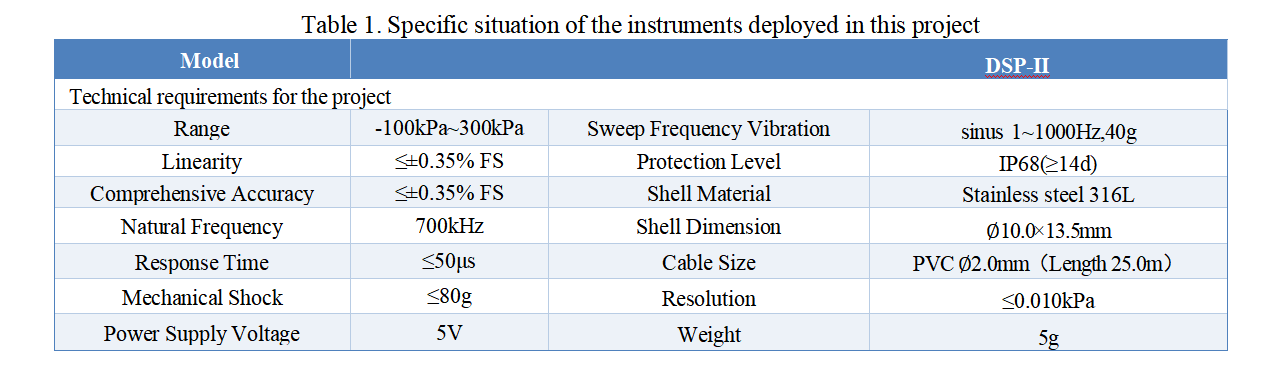
The instrument model provided for this project is DSP-II sensor (customized), with the main parameters shown in Table 1.
3. Project Overview and Representative Data
(1) Experimental equipment
For this test, a large-scale 5m×5m seismic simulation shaking table with three axes (X, Y, and Z) and six degrees of freedom was used. Its main performance parameters are as follows: load-carrying capacity of 30 tons, anti-overturning moment of 80 ton-meters, stroke of ±500mm for X & Y axes and ±200mm for Z axis, acceleration of 2g for X & Y axes and 2.0g for Z axis under full load, frequency range of 0.1Hz to 100Hz, and capability of inputting arbitrary waveforms such as sine, random, and seismic ground motion.
(2) Sensor deployment plan and on-site technical services
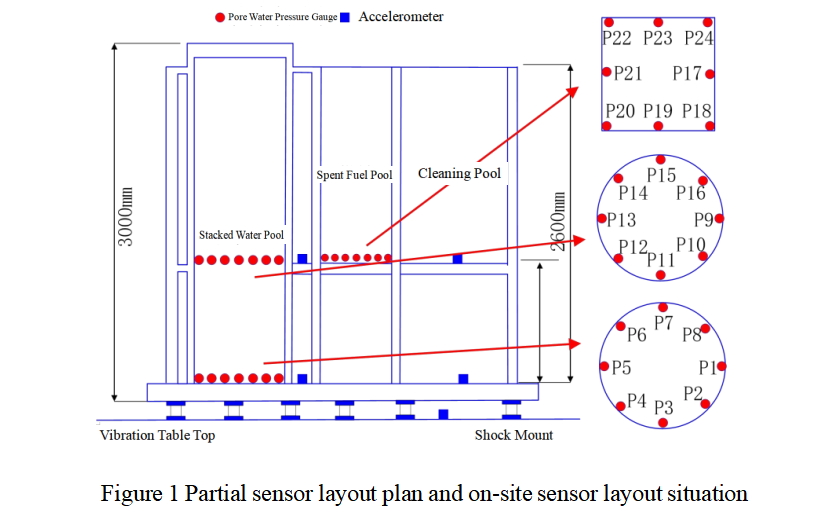
The sensor layout plan and on-site arrangement are shown in Figure 1. Specifically: 8 DSP-I type pore water pressure gauges (marked as P1~P8) are arranged on the inner wall of the bottom of the spent fuel pit. 8 DSP-I type pore water pressure gauges (marked as P9~P16) are arranged inside the spent fuel pit, 1000mm above its bottom. 8 DSP-I type pore water pressure gauges (marked as P17~P24) are arranged on the inner wall of the bottom of the pool. (Note: Due to project confidentiality, the pore water pressure gauges marked as P25~P32 are evenly arranged at key monitoring points inside the nuclear power facility and are not labeled in the figure.) In addition, Figure 2 shows the physical object of a large-scale nuclear reactor model, and Figure 3 shows the on-site technical services provided by the technical personnel.
(3) Seismic motion application plan
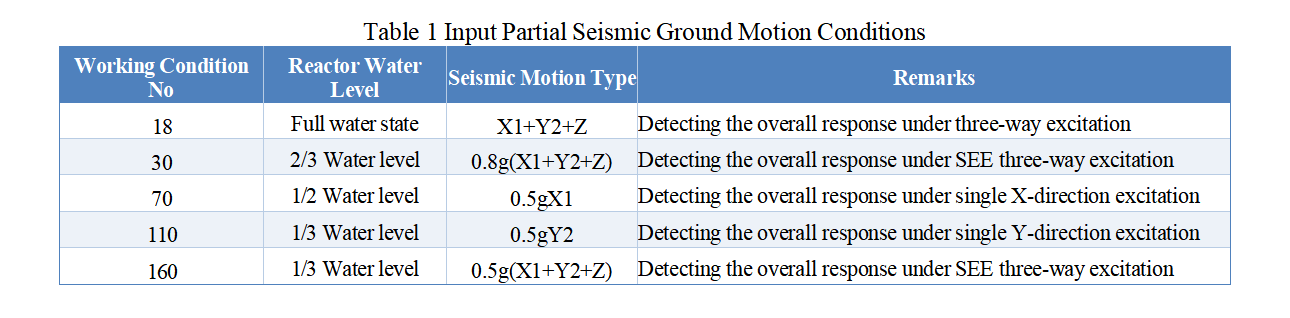
Table 1 shows the input seismic conditions. In this experiment, a total of 480 sets of seismic conditions were input, including 160 sets of strong seismic conditions (PGA ≥ 0.5g), with a project duration of 14 days.
(4) Representative experimental data
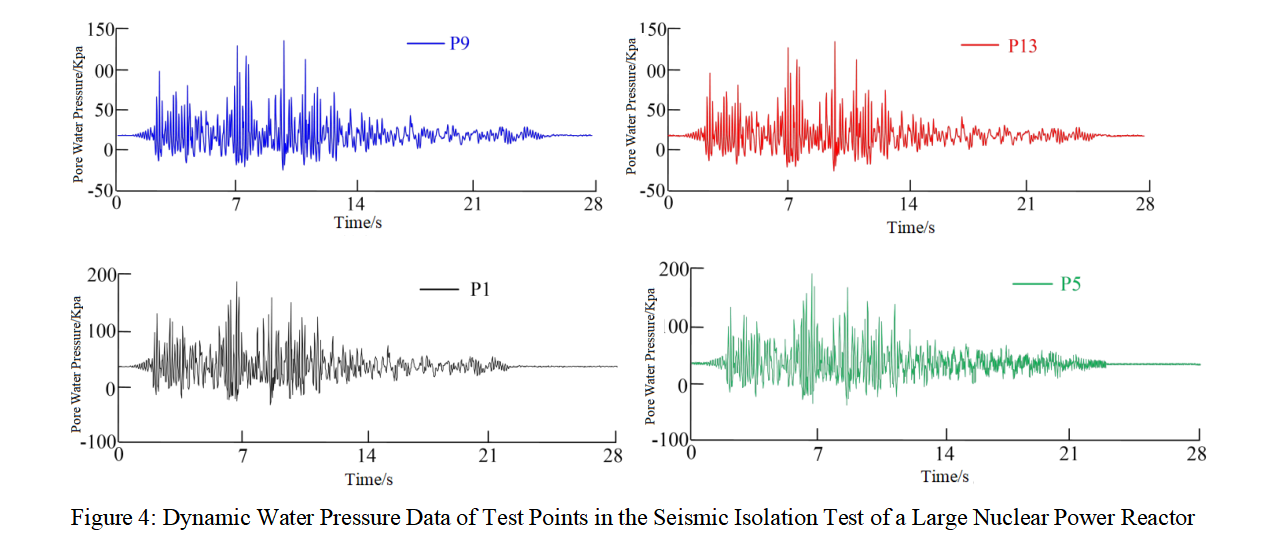
Figure 4 presents the pore water pressure response data of the P1, P5, P9, and P13 measuring points from the vibration isolation test of a large nuclear power plant reactor. As can be seen from the figure, when the vibration direction is along the same Z-axis, the pore water pressure data measured by the DSP-II pore pressure sensors at the symmetric measuring points are highly consistent.
4. Service evaluation
The national major energy facility and livelihood guarantee project lasted for 14 days, and our technical personnel provided technical services throughout the project site, including sensor layout guidance, fault diagnosis, sensor wiring, debugging of data acquisition instruments, sensor data analysis and processing. More importantly, the data recorded by the DSP-II pore pressure sensor provided important information for the study of the vibration isolation effect of nuclear power facilities, and was highly praised by the user unit.
The project has 480 sets of seismic input conditions, including 160 sets of seismic waves with peak acceleration PGA ≥ 0.5g. All 32 DSP-II pore pressure sensors can work normally, with a sensor failure rate of 0%. The dynamic water pressure measurement data is good, indicating that the DSP-II hole pressure sensor has the characteristics of high precision, dynamic testing accuracy, reliability, and long-term stability.

 Customer Service QQ